.png)
100 Unterschriften erreicht
An: The international community — including the United Nations, its human rights bodies, the European Union, international courts, and governments with diplomatic and economic influence on Iran.
Iran Beyond Theocracy and Monarchy: Women’s Freedom and Self-Determination
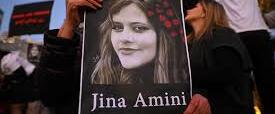
I speak from a society where oppression is not theoretical but lived, daily and structurally enforced. Women in Iran are systematically controlled, punished, imprisoned, and executed for asserting the most basic human freedoms. At the same time, peoples such as Kurds and Baluch experience compounded injustice through economic marginalisation, cultural repression, militarisation, and lethal state violence. These are not isolated abuses, but the outcome of long-standing centralised systems of domination.
The Islamic Republic has brought this repression to an extreme and institutionalised form. Its legal, political, and ideological foundations are incompatible with universal human rights, gender equality, and democratic self-determination. This reality must be stated clearly. Yet history also teaches that authoritarianism in Iran did not begin in 1979, nor would it automatically disappear with the fall of the current regime. Centralised power, imposed in the name of national unity, has been a persistent feature under both monarchy and theocracy, with diversity treated as a threat and dissent criminalised.
Today’s protests in Iran emerge from genuine and urgent grievances. They reflect a deep rejection of oppression, patriarchy, and political exclusion. What is deeply concerning, however, is how these movements are repeatedly distorted and instrumentalised by centralist, nationalist, or monarchist forces. These actors attempt to redirect struggles for freedom into projects of power restoration, often invoking nostalgia, symbolic leadership, or imposed unity. In doing so, they erase the plurality of voices within Iran and marginalise those most affected — particularly women and non-dominant nations whose right to self-determination has long been denied.
This petition addresses the international community, including global institutions and civil society actors. It does not call for externally imposed regime change or the substitution of one authoritarian structure with another. Instead, it demands a principled, rights-based approach grounded in international law and democratic values. Women’s rights must be recognised as central, not secondary, to any just political future. The right of peoples to freely determine their political status and forms of governance must be affirmed and protected. No system — whether religious, nationalist, or monarchical — should be legitimised if it reproduces hierarchy, exclusion, and concentration of power.
The global community must listen to those directly affected on the ground, rather than amplifying elite or nostalgic narratives that flatten complex realities. A sustainable future for Iran cannot be built on forced unity, charismatic figures, or recycled power structures. It must be based on decentralisation, equality, pluralism, and dignity — with women’s freedom and the right to self-determination at its core.
I speak out because I refuse to see today’s struggles reduced to another repetition of the past. The demand is not for a new ruler, a new dynasty, or a new flag imposed from above, but for liberation rooted in justice and equality. Anything less is not transformation, but continuity under a different name.
The Islamic Republic has brought this repression to an extreme and institutionalised form. Its legal, political, and ideological foundations are incompatible with universal human rights, gender equality, and democratic self-determination. This reality must be stated clearly. Yet history also teaches that authoritarianism in Iran did not begin in 1979, nor would it automatically disappear with the fall of the current regime. Centralised power, imposed in the name of national unity, has been a persistent feature under both monarchy and theocracy, with diversity treated as a threat and dissent criminalised.
Today’s protests in Iran emerge from genuine and urgent grievances. They reflect a deep rejection of oppression, patriarchy, and political exclusion. What is deeply concerning, however, is how these movements are repeatedly distorted and instrumentalised by centralist, nationalist, or monarchist forces. These actors attempt to redirect struggles for freedom into projects of power restoration, often invoking nostalgia, symbolic leadership, or imposed unity. In doing so, they erase the plurality of voices within Iran and marginalise those most affected — particularly women and non-dominant nations whose right to self-determination has long been denied.
This petition addresses the international community, including global institutions and civil society actors. It does not call for externally imposed regime change or the substitution of one authoritarian structure with another. Instead, it demands a principled, rights-based approach grounded in international law and democratic values. Women’s rights must be recognised as central, not secondary, to any just political future. The right of peoples to freely determine their political status and forms of governance must be affirmed and protected. No system — whether religious, nationalist, or monarchical — should be legitimised if it reproduces hierarchy, exclusion, and concentration of power.
The global community must listen to those directly affected on the ground, rather than amplifying elite or nostalgic narratives that flatten complex realities. A sustainable future for Iran cannot be built on forced unity, charismatic figures, or recycled power structures. It must be based on decentralisation, equality, pluralism, and dignity — with women’s freedom and the right to self-determination at its core.
I speak out because I refuse to see today’s struggles reduced to another repetition of the past. The demand is not for a new ruler, a new dynasty, or a new flag imposed from above, but for liberation rooted in justice and equality. Anything less is not transformation, but continuity under a different name.
Warum ist das wichtig?
t this matters to me because the injustice in Iran is not theoretical for me — it is something I have seen, lived, and carries real names and faces. Women are punished or killed for demanding basic freedom, and peoples like Kurds and Baluch are exposed to layered oppression: economic exclusion, cultural repression, and state violence. I also know from history that replacing one authoritarian system with another — whether religious or monarchical — does not bring freedom. That is why I care: because this struggle is about dignity, women’s freedom, and the right of people to decide their own future, not about changing rulers or symbols.