.png)
An: Swiss Federal Parliament
Petition on Mass Killings and Systematic Repression of Civilians in Iran
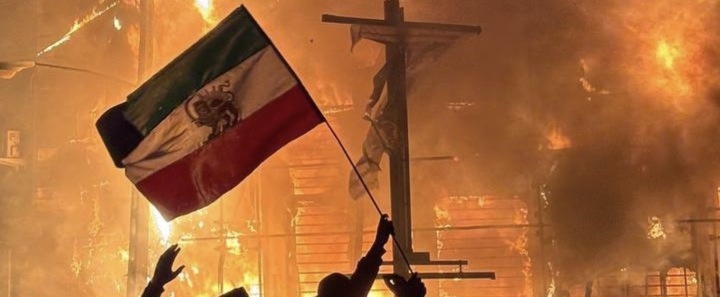
The Swiss Federal Parliament should take comprehensive, concrete, and coordinated measures in response to credible and persistent reports of large-scale human rights violations committed by the authorities of the Islamic Republic of Iran during recent nationwide protests.
These measures should include the designation of the Islamic Revolutionary Guard Corps (IRGC) as a terrorist organization, in alignment with the European Union’s decision of 29 January 2026, recognizing the IRGC’s central role in violent repression, mass killings, torture, and intimidation of civilians. Switzerland should further impose targeted political and economic measures, including the suspension of commercial relations with state-linked institutions involved in repression, and the freezing of assets and financial networks connected to individuals and entities responsible for serious human rights abuses.
The Swiss authorities should review and restrict Iranian diplomatic missions, cultural centers, and affiliated institutions where credible evidence indicates misuse for surveillance, intimidation, or intelligence activities targeting Iranian citizens and diaspora communities. Switzerland should also actively support free and unrestricted access to the internet and communication services for civilians in Iran, recognizing access to information as essential for the protection of human life, documentation of abuses, and accountability.
In addition, Switzerland should pursue avenues for criminal accountability under the principle of universal jurisdiction, in accordance with Swiss law and international obligations, for acts including torture, extrajudicial killings, and crimes against humanity. The Swiss Federal Parliament should call for the immediate and unconditional release of all political prisoners, demand an immediate moratorium on executions, and clearly express Switzerland’s readiness to support a peaceful and democratic transition grounded in respect for human life, dignity, and fundamental freedoms.
Warum ist das wichtig?
According to multiple credible reports from within Iran, including medical personnel, eyewitnesses, independent human rights organizations, and international media, the scale of violence used by Iranian authorities against civilian protesters has reached extraordinary levels. Estimates indicate that between 16,500 and 36,500 civilians have been killed, while the United Nations Special Rapporteur on the situation of human rights in Iran has stated that the death toll during the recent suppression of nationwide protests may exceed 20,000. In addition, more than 300,000 civilians have reportedly been injured, including tens of thousands suffering severe eye injuries and permanent vision loss, often as a result of deliberate targeting by security forces.
In parallel with these killings, tens of thousands of individuals—predominantly young men and women—have been arbitrarily arrested. Credible information indicates that many details have been subjected to systematic torture and other ill-treatment, including beatings, threats of execution, denial of medical care, and coerced confessions, some of which have been broadcast on state media. Death sentences have already been issued against a number of details, while many others remain at serious and imminent risk of execution following procedures that fail to meet even minimum standards of due process.
At the same time, Iranian authorities imposed a near-total nationwide shutdown of internet and communication services lasting more than two weeks. This blackout was not incidental; it appears to have been deliberately used to conceal mass killings, mass arrests, torture, and impending executions, suppress evidence, obstruct independent reporting, and delay international scrutiny and response.
Credible reports further document:
- Unlawful use of lethal force, including live ammunition and heavy weaponry, against largely unarmed civilians, including children and young adults
- Mass arbitrary arrests and enforced disappearances, with details held in unofficial or undisclosed locations without information provided to families
- Systematic torture and ill-treatment in detention, including physical abuse, psychological pressure, and forced confessions
- Targeting of injured protesters and intimidation of medical personnel, including arrests in hospitals and threats against healthcare workers, undermining medical neutrality
- Harassment, coercion, and intimidation of victims’ families, including pressed burials, withholding of bodies, and extortion to enforce silence
- Rapid prosecutions and death sentences following grossly unfair trials, often based on charges such as “moharebeh” (waging war against God)
Taken together, these acts constitute mass murder and systematic repression and may amount to crimes against humanity and other serious violations of international human rights law.